Where I Add Most Value
Enterprise-scale work in retail, finance, mobility, and healthcare — a global apparel brand, one of the world’s largest retail banks, a large mobility provider, and a national health and care platform.
The current chapter: For the past eighteen months, I’ve worked with the team at a large, established organisation to turn AI experiments into a capability they own. The Centre of Excellence now runs a community of practice, an opportunity funnel, a decision tree for solution directions, and an AI platform of reusable building blocks — so each new solution starts further along, in build and in governance — case study coming soon.
Question 1: What problem do I bring you?
Leadership sees the potential. Technology teams see solutions. Product and service teams see the complexity. No one yet has the same picture: what to build, why, how it gets adopted, which risks need managing.
AI has come in through every open door — product teams, marketing, legal, a plugin here, a tool there — and the pilots don’t add up to a strategy.
A promising prototype has to grow into a trusted service — integrated with the organisation’s processes, people, systems, and data.
Leadership is asking for a story it can stand behind — a roadmap, a way to make decisions.
Product, design, data, legal, operations, and technology are all in the room, but not pulling in the same direction.
AI is exposing problems the organisation has worked around for years — unclear data ownership, decision rights, teams that speak different languages.
Every conversation is about use cases and tools; no one is looking at the workflow end to end.
Question 2: What will you help me decide?
The decisions that sit between strategy and delivery:
Which AI opportunities are worth pursuing — including the ones that look hard because they force you to fix what’s underneath.
Whether something should become a product, a service improvement, an internal capability — or stay an experiment.
How much human oversight and governance the service needs — and who answers when it goes wrong.
The adoption path — how roles and rewards change, so people gain from working with AI.
The teams, capabilities, data, and operating-model changes required — and who owns the outcome once the central team steps back.
What to test first, before committing serious time, budget, and attention.
Five Shifts That Move the Work
How they work together — in sequence
Shared Goals & Understanding
“Are we solving the same problem?”
This fits when the ambition is there but no one has pulled it into a coherent plan. I read the patterns across the groups and surface the connections nobody can see from inside their own remit — the assumption a technology team is making about the business, the trade-off leadership hasn’t been told about. Most of what matters lives at the seams: between business and technology, between what AI promises and what it can actually do. The aim is a common language and a direction people can challenge and commit to.
Shared Visibility
“Wait, this is how it actually works?”
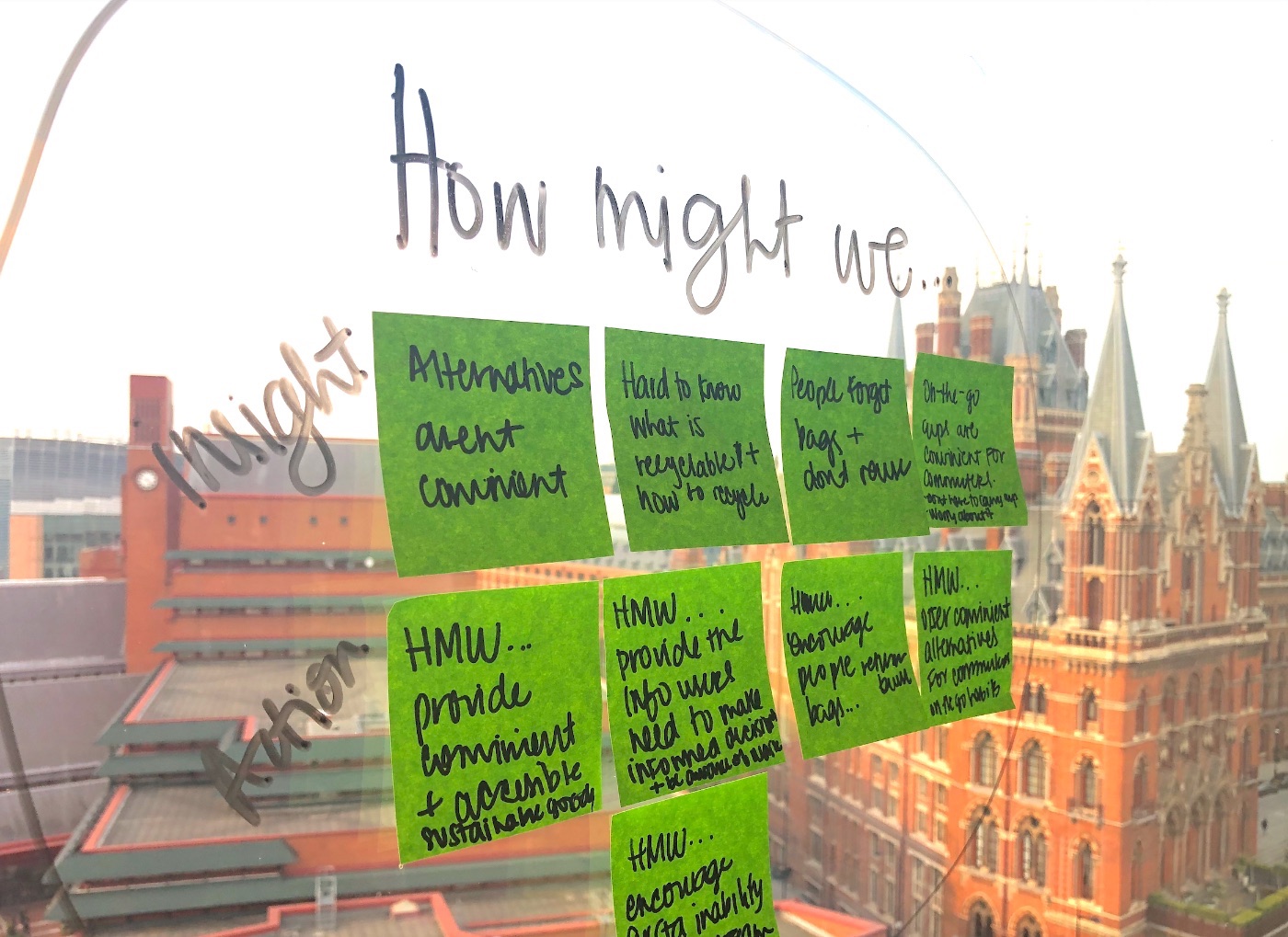
I make complex systems visible. Drawing the process is the easy part; the real work is getting people from different silos to describe honestly how the work actually happens. Once everyone can challenge the same picture, the conversation changes. People stop defending their tool or their department and start talking about how the work should flow. This is service design made practical: human, operational, and AI steps designed into workflows people can trust. At a large mobility provider, that meant a blended business-and-IT team redesigning sixty-plus service processes to one shared vision — and carrying it forward as their own.
Shared Evidence
“Let’s try it before we marry it.”
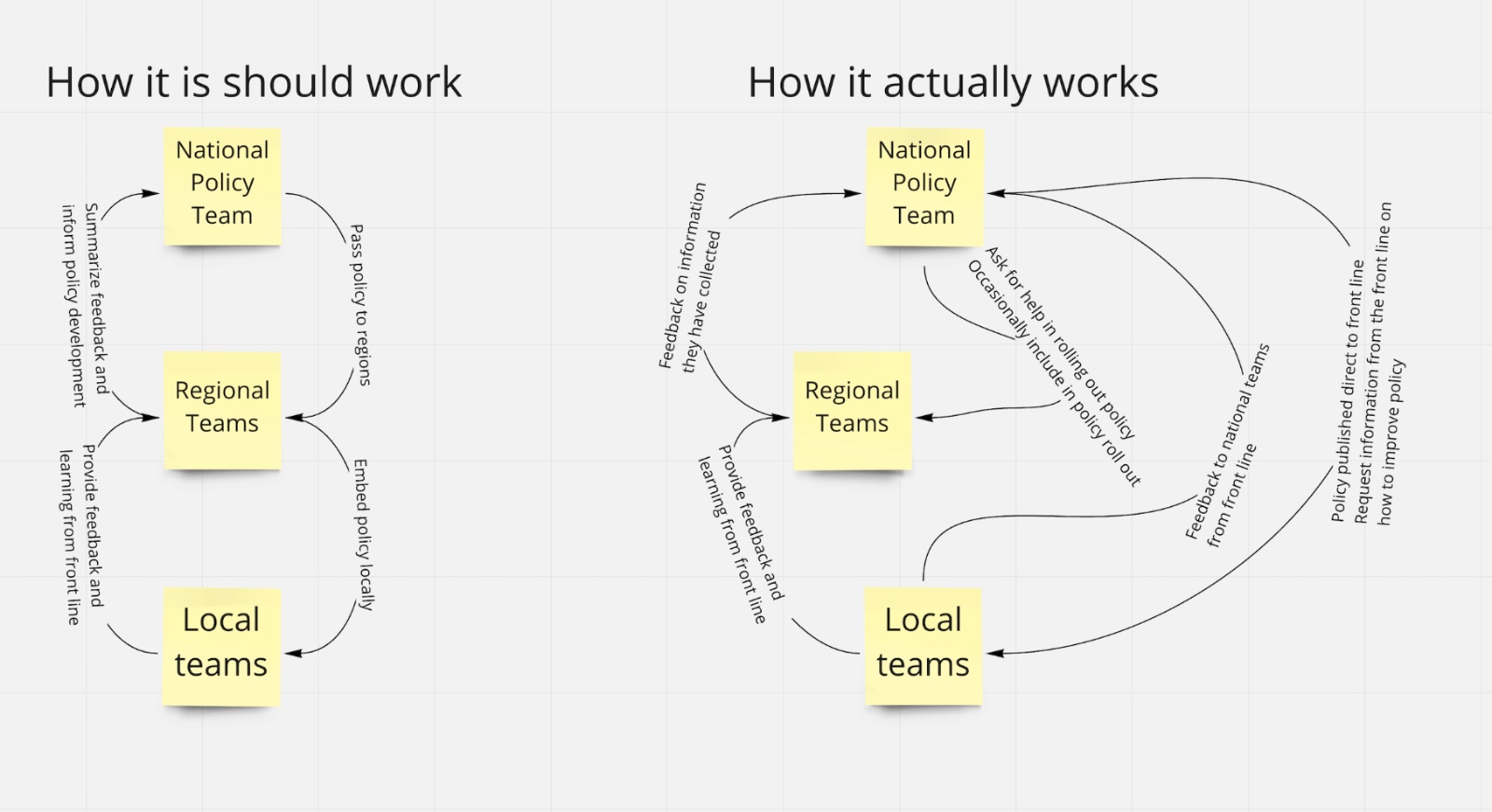
I design small, safe-to-learn pilots that test real value and technical feasibility before organisations commit at scale. I’m not after a polished demo. I want evidence from real operational conditions. When a pilot breaks on the data or the systems underneath, that is not a failure — it is the map of what has to be fixed before scale. For a global apparel brand, that meant building a twelve-week MVP capable of handling hundreds of live products — enough to test the riskiest assumptions against reality.
Shared Movement Across Teams
“How do we make this everyone’s practice, not someone’s task?”
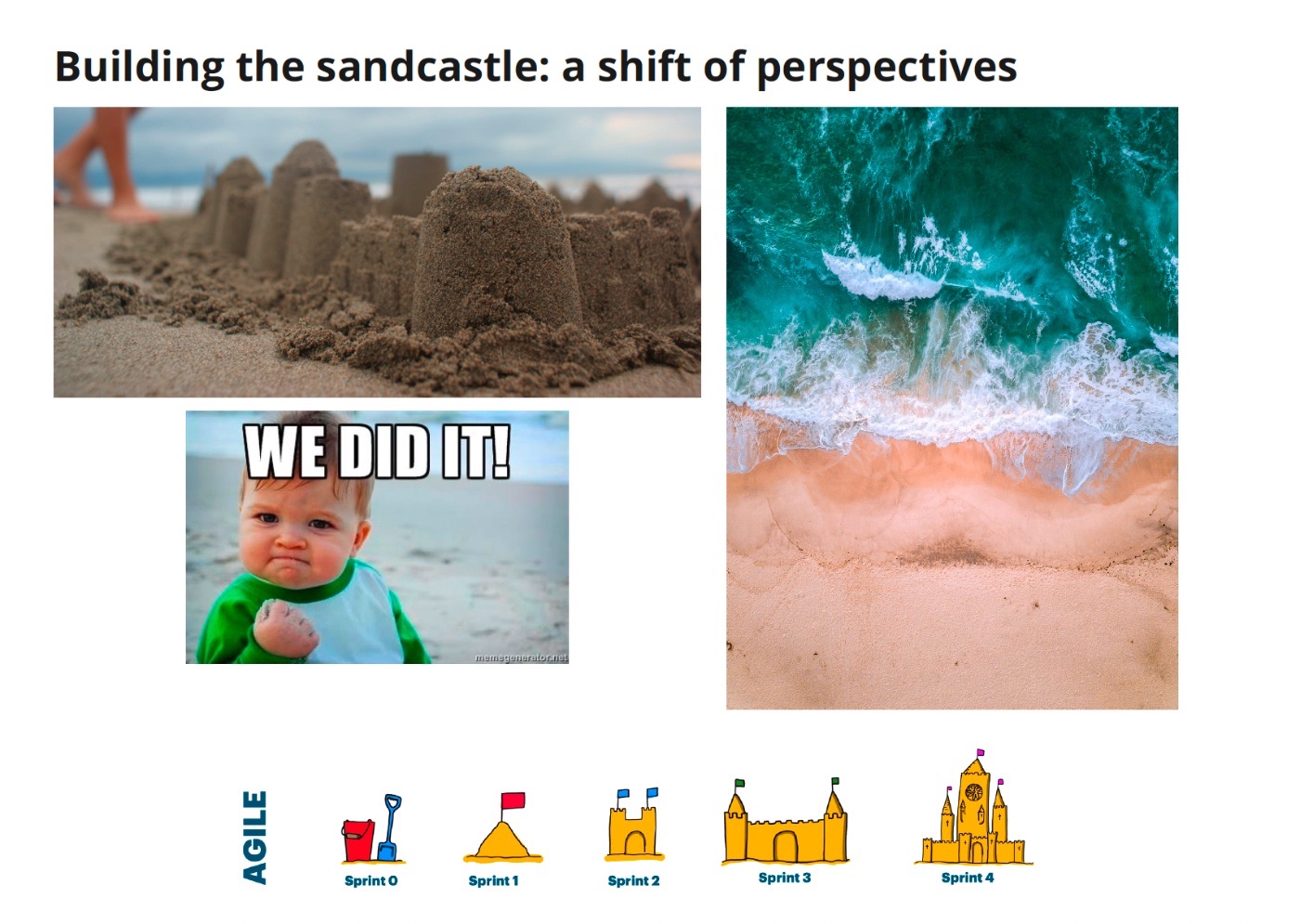
This role fits when the work can no longer move through one team alone. Progress often slows at the seams: between product, technology, operations. Each group has valid priorities. The problem is lack of coordination.
I help the work move across those boundaries. I connect the people who need each other, clarify who owns what, and surface tensions early. Then I build the forums and rituals that help decisions move. The aim is practical coordination: enough trust and clarity that people carry the work forward when it gets hard.

Shared Operating Model
“How do we make this work at scale?”
When something works, I help organisations scale it without losing coherence. That means creating the governance, design systems, operating principles, and adoption structures that allow teams to move consistently across large programmes. Scale changes more than headcount: roles shift, and so does what leadership reviews in the rhythm of the business. At one of the world’s largest retail banks, I helped scale an originations redesign from a single cross-functional team to more than 150 people across six offices.