Proud highlights

Selected Cases

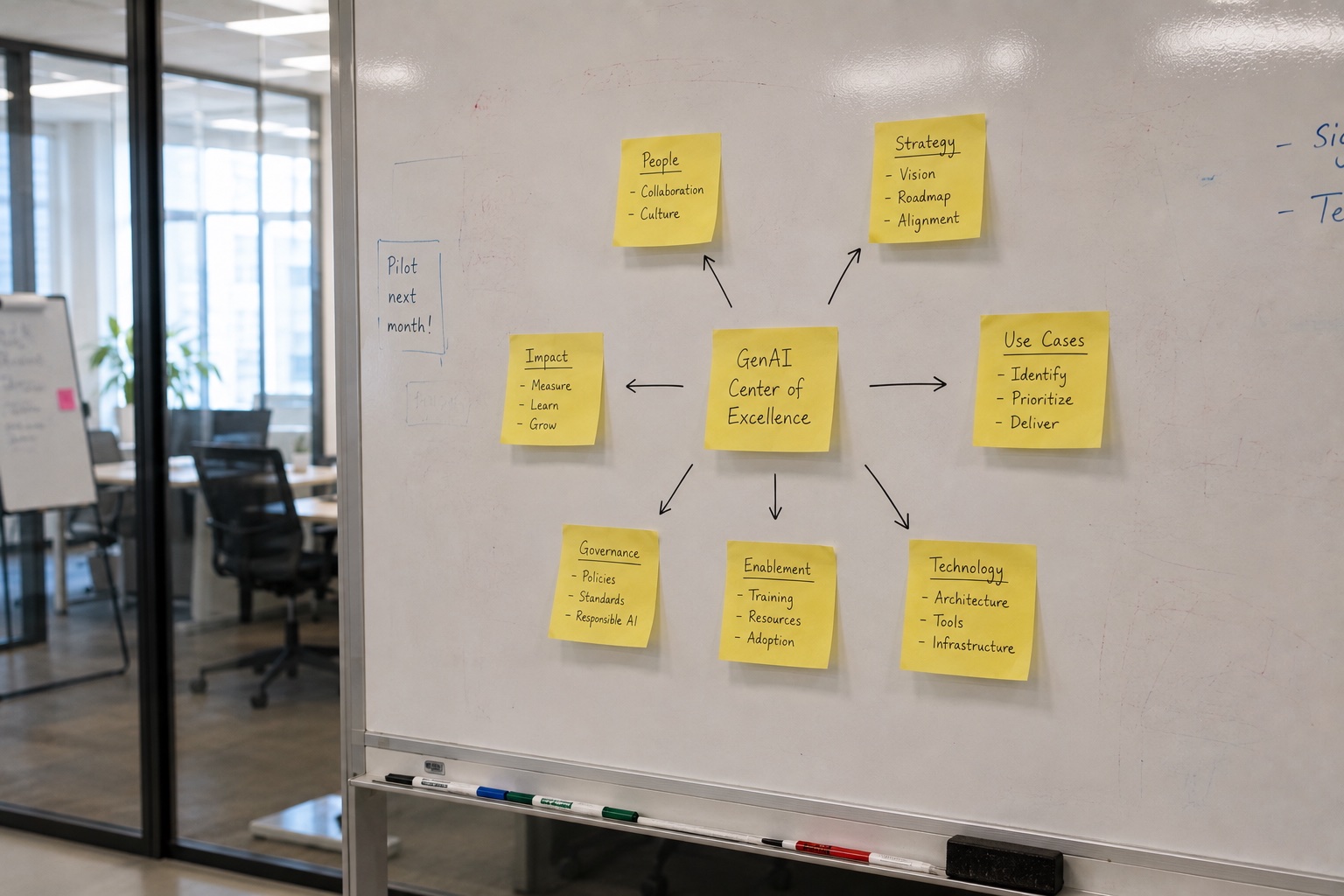
A whiteboard mapping a GenAI Center of Excellence — sticky notes for Strategy, People, Use Cases, Governance, Enablement, Technology and Impact radiating from a central GenAI Center of Excellence note.
GenAI CoE · eighteen months in Case study coming soon

Building a GenAI Center of Excellence inside a large organisation

For the past eighteen months, I’ve worked with the team at a large, established organisation to turn scattered GenAI experiments into a capability they own: a Center of Excellence with a community of practice, an opportunity funnel, a decision tree for solution directions, and an AI platform with composable building blocks to accelerate build and governance steps.

Banking · 8.6× conversion

Originations, Rebuilt to Convert

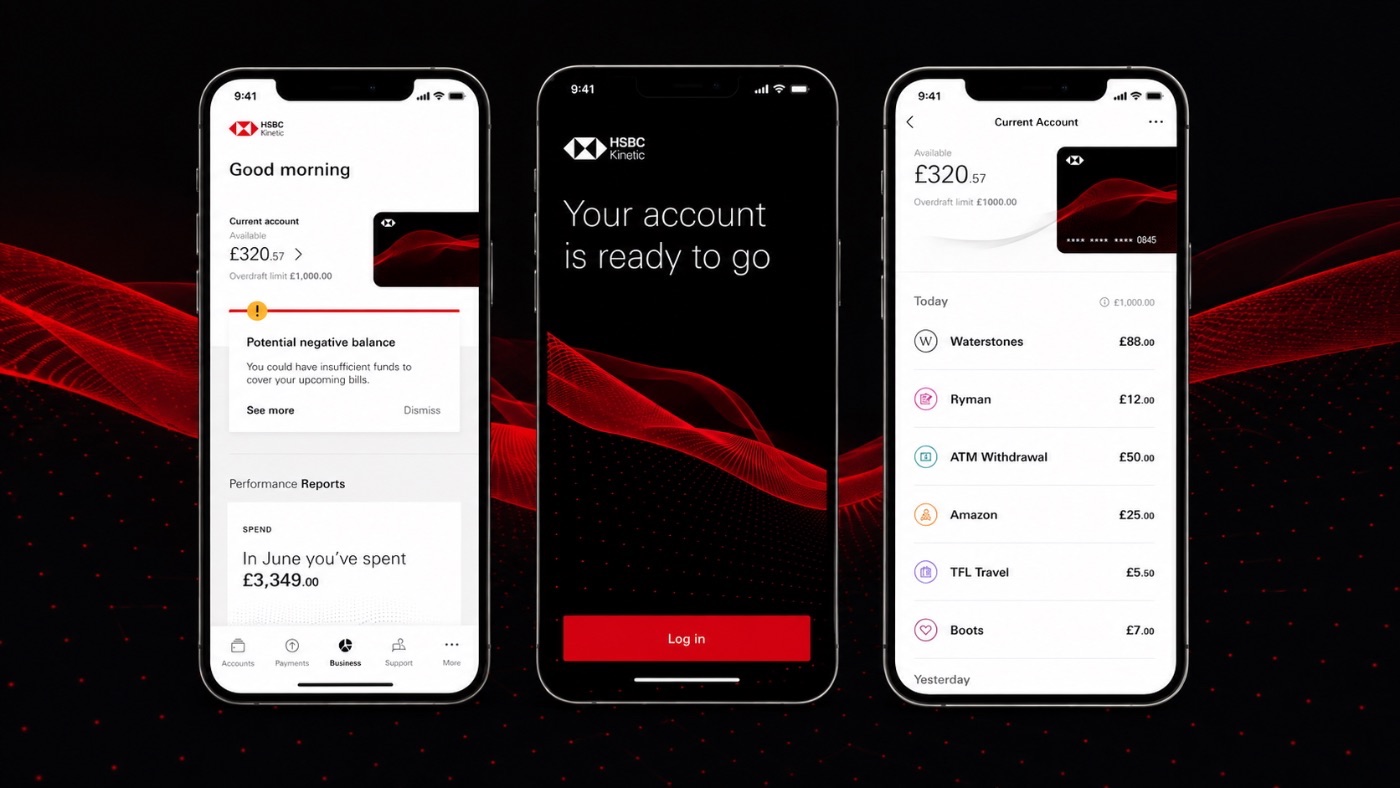
One of the world’s largest banks ran a slow, branch-dependent onboarding journey. I helped shape the end-to-end experience and started the code-based design system that let the programme scale past 150 people — and lifted onboarding conversion 8.6×.

Read the case
Apparel · 12-week MVP → multi-year engagement
One Product for Everyone Who Builds a Collection

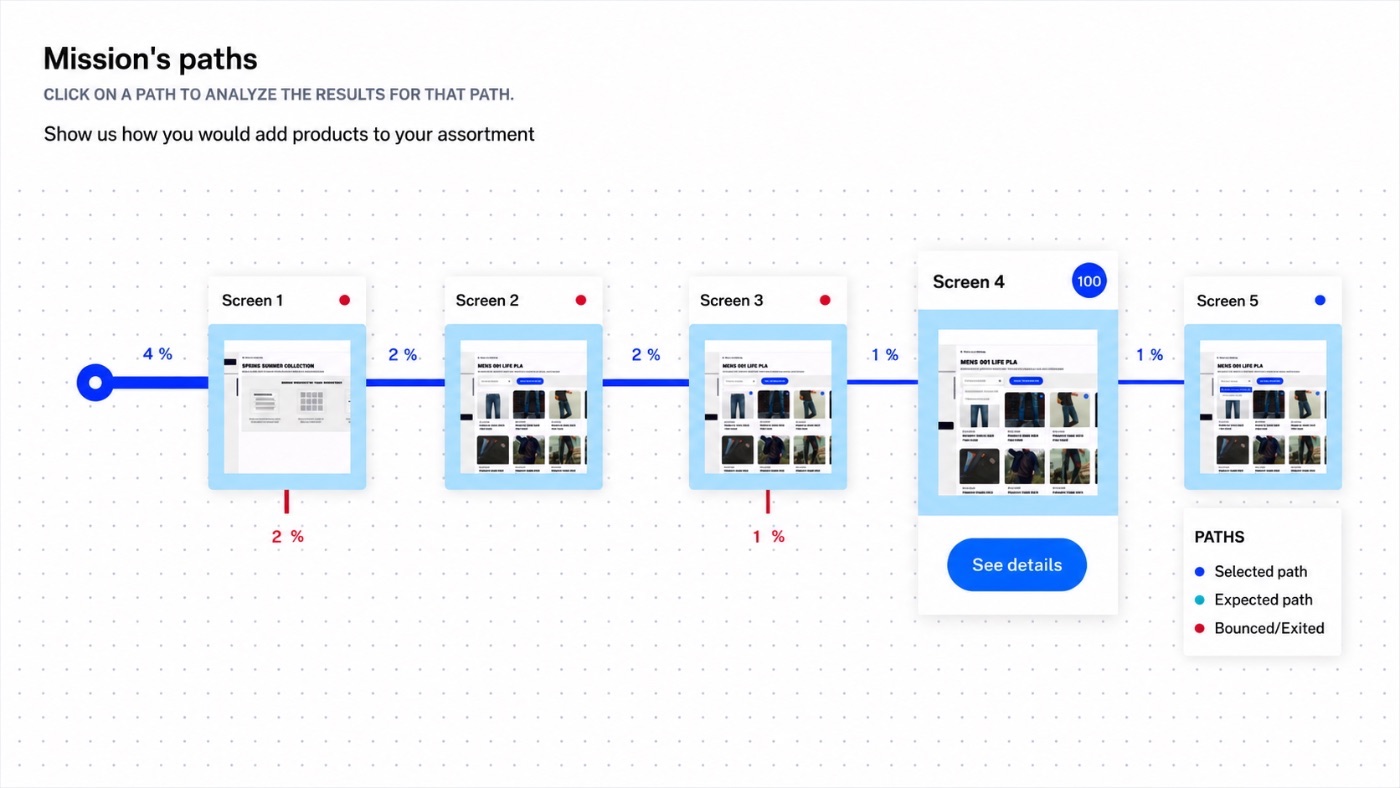
A global apparel brand’s design, merchandising and commercial teams built seasonal collections across scattered text tools that did not match how they worked. I initiated the partnership, set up a 16-person team across two continents, and led the discovery that turned the whole process into one shared product.

Read the case
In-person service · 60+ processes
A New Purpose for In-Person Service

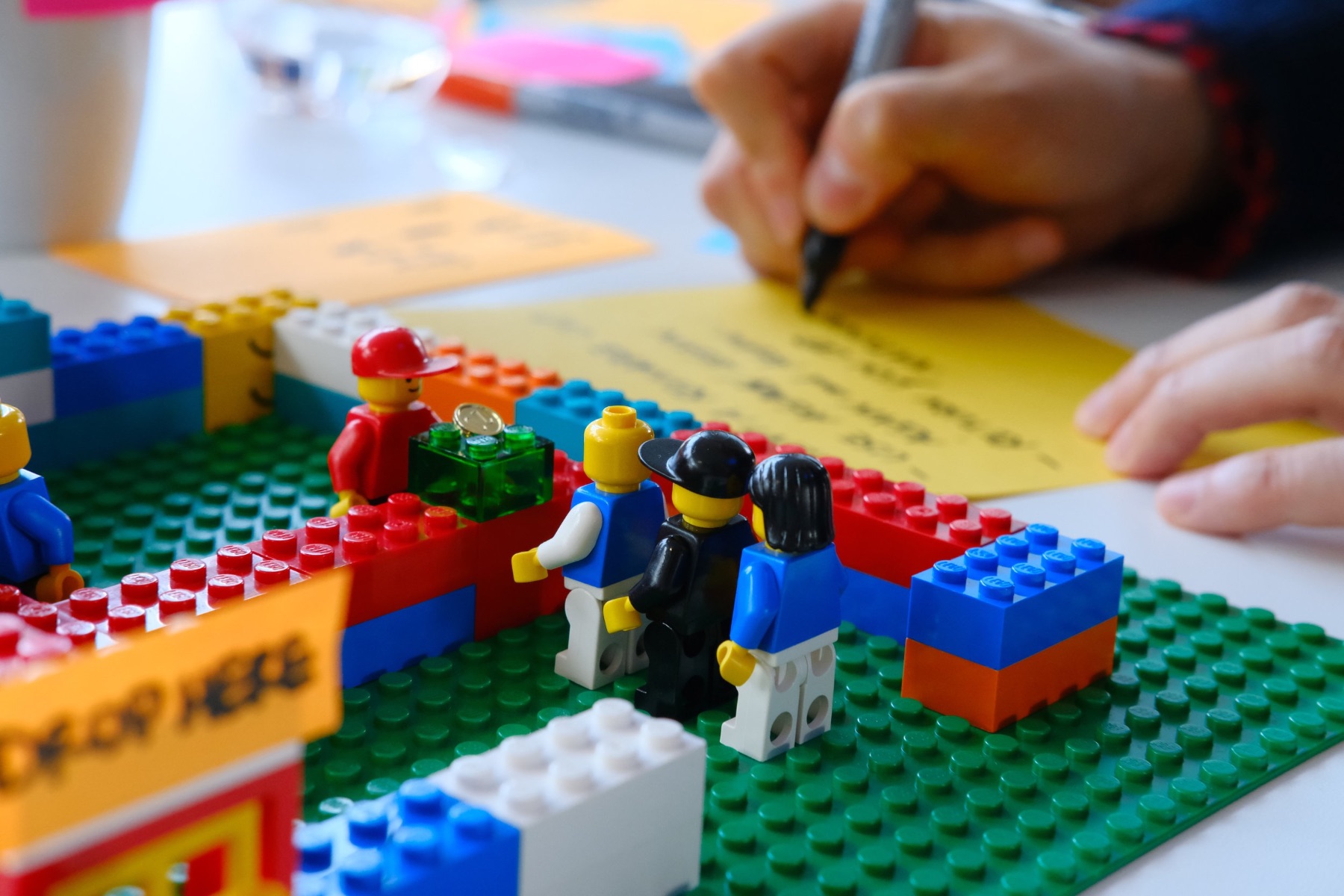
When people moved online for the simple tasks, a large service organisation had to ask what its in-person service was now for. I led a blended business-and-IT team to a shared vision and a redesigned point-of-sale system.

Read the case
NHS FutureNHS · 50k monthly users
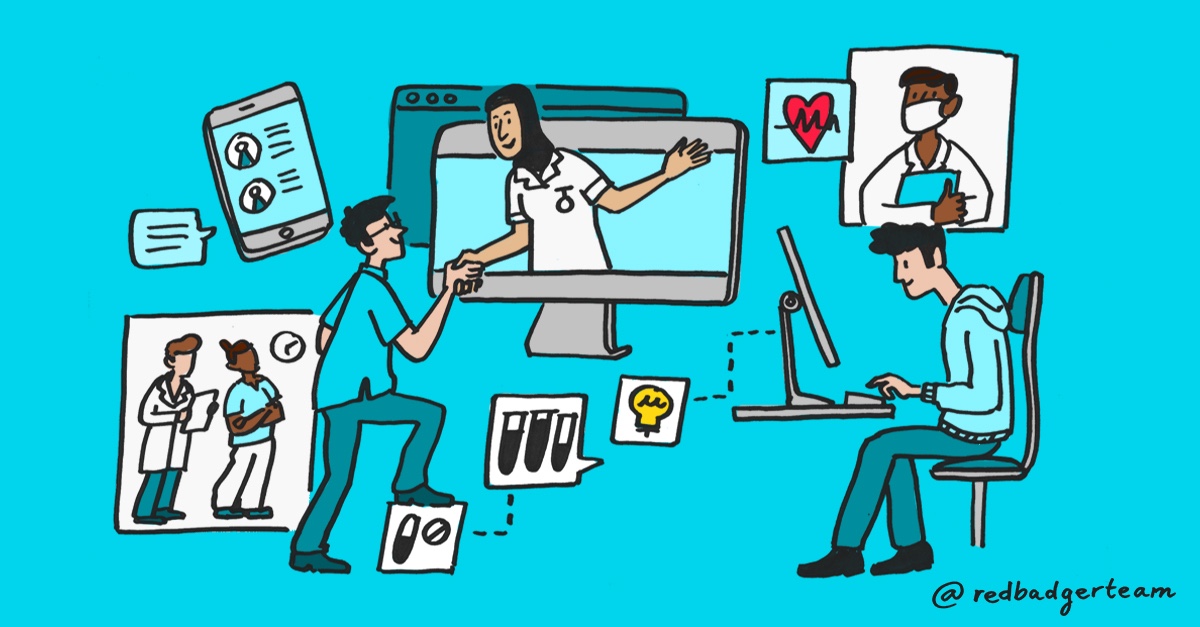
FutureNHS — The Next Generation of a National Platform

The NHS's health and care community leaned on FutureNHS — one collaboration platform holding a thousand-plus communities — through the pressure of COVID. As Product Director I helped define what its successor had to become, and how to build it: more engaging, more scalable, cheaper to run, and delivered in the open as an open-source public good.

Read the case

Knowledge transfer

If You Can’t Teach It, It Isn’t Clear

Experience as Course Director at Berghs School of Communication, Stockholm — Service Design and Digital Product. Visiting lecturer at King’s College London — Creative Problem Solving.

At Berghs, I designed and led a 12-week immersive programme in service design, innovation, and digital product development. Students formed multidisciplinary teams, ran generative research with users and experts, and identified challenges worth solving. Their concepts grew from low-fidelity sketches into high-fidelity prototypes, tested against real users at every step, and left the course as portfolio-ready case studies.

Each term carried a theme that tied design practice to a bigger shift. Spring 2022 — Circular Service Design, under “From ownership to access of products.” Fall 2022 — Digital Health, through the lens of “Healthy body / Healthy mind.”

Industry in the room

I brought practitioners from Google, frog, VanMoof, and Digital Catapult into the classroom, so students tested their thinking against people doing the work now.

Students moved beyond theory: research, experimentation, prototyping, and the habit of letting user feedback win the argument.

From people I've worked with.

What People Have Noticed

“Where others have said 'it's too hard' Andreas has dived in, set objectives, put a plan in place and ran with it. He leans in and is not afraid to lead others. Andreas is full of ideas and is also capable of executing them — a powerful combo.”
Cain Ullah — Founder, Red Badger Consulting, London
“Andreas is definitely a leader of change. He has a strong strategic vision, expresses it well, and convinces stakeholders to choose a new direction. His sincereness in asking questions and openness to thoughts make it easy to establish a relationship. With his positive relation style he is well informed, connected, and trusted in the organisation.”
Tom Rijks — Customer Success Director, TCS Pace, Amsterdam
“Such a pleasure working with Andreas! He's great at what he does and he's very easy to work with. Berghs School of Communication is lucky to have him leading one of its top courses in UX and Digital Product Design. Andreas is an excellent course leader, competent, fully committed, resourceful, and inspiring. He has created a great collaborative culture in his course, bringing international professionals from different backgrounds together in a great learning experience. Reading his students' feedback was simply a joy!”
Marco Ortolani — Director of International Business, Berghs School of Communication, Stockholm
“I hadn't done a course similar to this in a very long time — with the same energy, tempo, focus and overall gusto. It feels like we're doing something meaningful and important, which means a lot in these times. At the end of the course, I have a portfolio piece that I'm proud to share and new connections with people I want to keep alive. Taking the course was the smartest professional decision I've made in years, and I highly, highly recommend it.”
Student — Berghs School of Communication, Stockholm

Where I test what I later recommend.

My AI Sandbox

The place I take real problems to AI — before I turn what I learn into advice for clients.

I use it to test the patterns I think organisations will need next: how to commission work clearly, keep context alive across long pieces of work, review outputs with judgement, design the right checkpoints, and stay responsible as more of the execution moves into AI-enabled systems.

Working this way keeps me close to the material, shows me what actually breaks, and surfaces which patterns hold up once the work gets messy.

In the assistive phase I stay in the loop — the judgement is mine, applied move by move. In the agentic phase I move onto the loop — the judgement moves up front, into the boundaries, checkpoints and escalations I set, and the work returns to me by exception.

i.

Sparring Spaces

Disciplined human–AI collaboration in the assistive phase: AI as thinking partner, challenger and reviewer — over a memory that compounds.

A working environment for framing problems, holding continuity, and challenging assumptions. The human is the author; the model cycles reason → act → remember, and the memory layer with a self-improvement flow is what turns a good session into a better next one.

Postures · Reason–act–remember · Working memory · Episodic recall · Expert challenge

Functional view · 01Assistive phase
Human holds intent, judgement & authorship — stays in the loop
sparring
Model · postures
Partnergenerate
Challengercritique
Reviewerevaluate
the working loop
Reason·Act·Remember
FrameDraftChallengeReviewDecide
Workingshort-termthis thread · scratchpad · live decisions
Recalllong-termEpisodic past sessions & what held up · Semantic domain context · Profile how I think
Functional lineage — human-in-the-loop & reflection; memory after CoALA (Sumers & Yao). After Mollick (Co-Intelligence), Ng (reflection), Weng (agent memory).
The assistive phase: the human keeps authorship and judgement; the model supplies generation, critique and review as named postures and runs a reason–act–remember loop; a two-tier memory — working memory plus episodic, semantic and profile recall — is what carries continuity across sessions.
ii.

Agent Fabric

The agentic phase: a person directing work across multiple agents that reason, call tools and remember — inside explicit boundaries.

Bounded commissions with objectives, tools exposed through a common protocol, memory that persists, checkpoints, escalation rules, and human responsibility. Trust starts where the boundaries are explicit.

Commissions · MCP tools · Memory · Checkpoints · Escalation · Access & audit

Functional view · 02Agentic phase
Director human — sets the commission, owns the outcome
objective + success criteria
Guardrails
Orchestrator reason → act → remember · decompose · delegate · synthesise
Agent
Agent
Agent
⊞ MCP tools / APIs▦ Memory · short + long
short agent state · messages  |  long semantic · episodic · profile · prompts
Evaluator · checkpoint pass → synthesise  ·  fail → loop ↻  ·  breach → escalate ⤴
BoundaryIdentity·Fine-grained access·Full audit trail
Functional lineage — agent = LLM + planning + memory + tools; tools via MCP (Anthropic, Model Context Protocol). After Weng; Anthropic (orchestrator–workers, evaluator–optimizer); memory after CoALA.
The agentic phase: a bounded commission flows down through an orchestrator that reasons, acts and remembers; worker agents share MCP-exposed tools and a short- and long-term memory; an evaluator gates every handover, and a hard boundary of identity, fine-grained access and audit holds underneath — anything past the guardrail escalates to the accountable human.

Contact.

If this resonates, please do say hello.