FutureNHS — The Next Generation Of A National Collaboration Platform
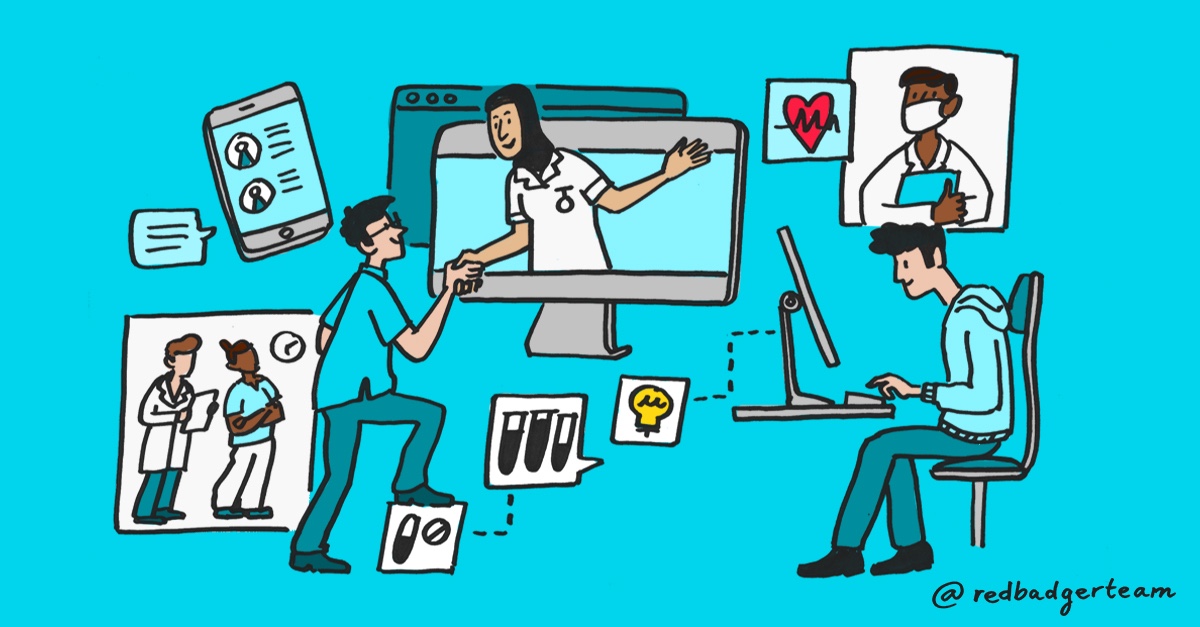
FutureNHS is the national collaboration platform for NHS staff — GPs, nurses, physiotherapists, department leads — sharing what they know across the thousands of organisations that make up the system. It hosts more than a thousand communities and supports over fifty thousand monthly active users, and it is unusual among staff-facing services in being owned by the people who use it: communities form around their needs and interests rather than an org chart. During COVID-19 that usage surged, as health and care staff across the country leaned on it to share knowledge quickly and work together under real pressure.
The surge also exposed the limits of the existing platform. To meet the demand it had created, the NHS needed a successor — one that was more engaging, easier to use, more scalable, and less expensive to run.
As Product Director, I worked closely with the NHS's product and service teams to define how the next version of FutureNHS should work, and what it actually needed to deliver for the people using it. I brought structure, a clear strategic line, and a way of working that kept stakeholders aligned around one shared picture of the future rather than several competing ones.
The work sat across product, delivery, and technical decisions at once, and much of my contribution was keeping those three from drifting apart. We also made an early, deliberate choice about how to build: in the open. FutureNHS would be developed as open-source software, hosted on a public code repository (GitHub) and open to outside contributions, built on existing open projects with fixes contributed back upstream. The goal was a public good, not only a newer platform — and that stance shaped everything that followed, from how we ran research to how we made decisions with the NHS in the room.
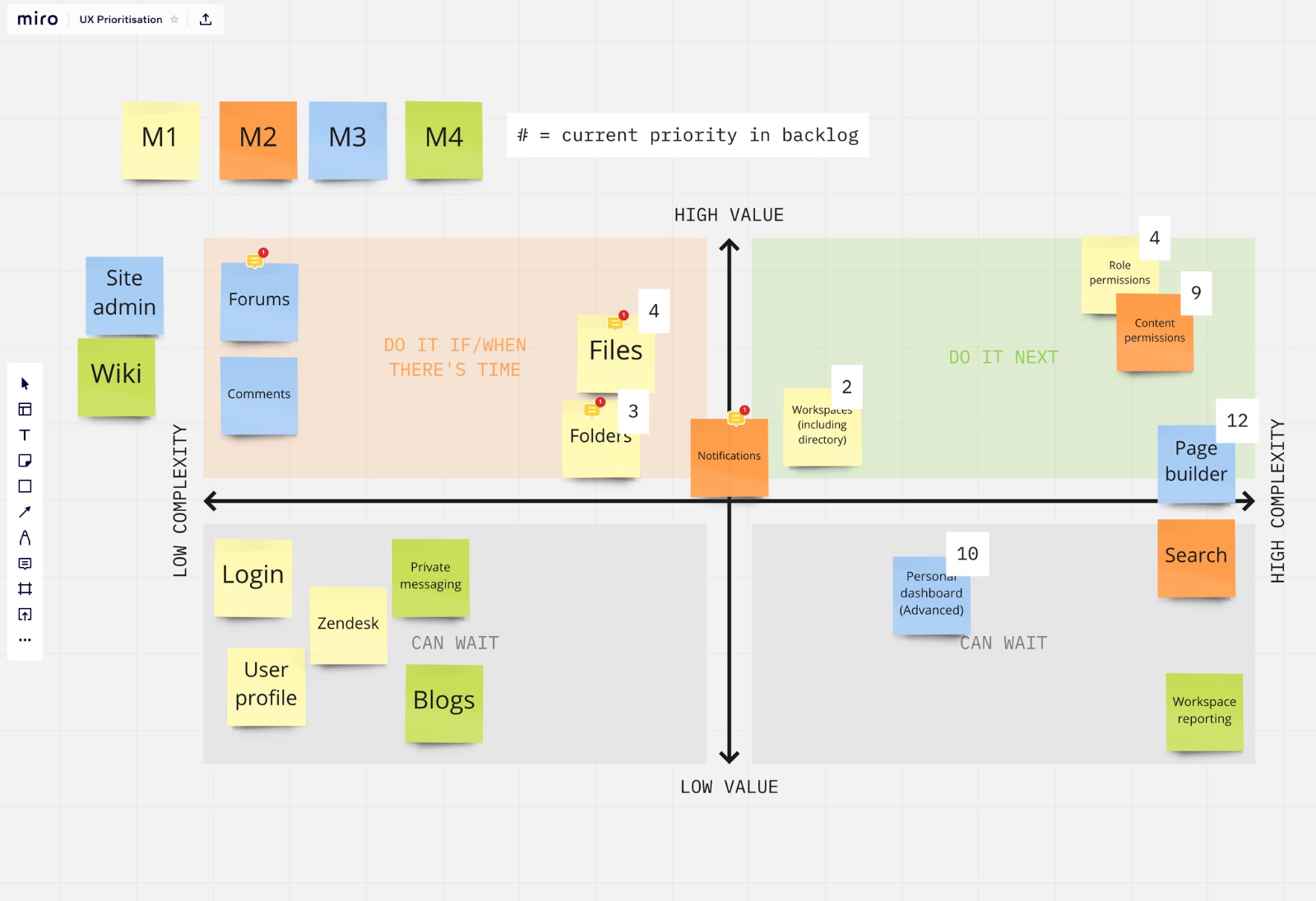
We began with a mission plain enough to hold a programme together: increase collaboration across the health and care system while bringing down the long-term cost of running the platform — and we grounded it in evidence before shaping anything. Discovery ran on three tracks at once: dozens of interviews with the people who actually run and use the communities, a close read of support tickets and usage analytics, and a platform-wide survey that let every member point to what was missing. What came back became a single, prioritised backlog — every candidate feature scored on the value it would create against the complexity of building it, then sequenced into clear delivery milestones.
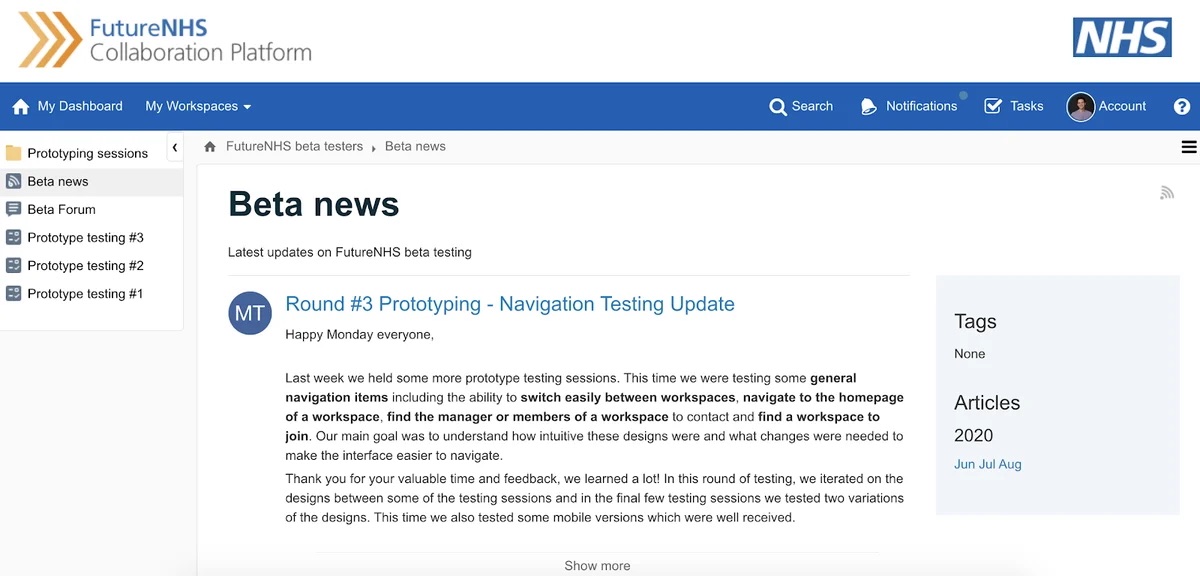
From there we designed in the open and tested early. We adapted the NHS.UK and GOV.UK design systems to the context of a staff-facing collaboration tool, and published our design and style guidance openly — in Zeroheight, alongside the code — so the NHS's teams and ours built from one source of truth. Working in Figma and Zeplin, interactive prototypes put navigation in front of real workspace managers and members, so we could watch where the signposting broke down and fix the wayfinding on screen before a line of it was built.
Working alongside the NHS let us do the more useful thing — challenge assumptions that had gone unexamined, simplify the experience, and shape an open-source architecture that could keep evolving with the system's needs. We researched the ecosystem and engaged partner teams at Health Education England and NHS Digital to shape the service architecture we carried into beta. We held ourselves to the GDS Service Standard through discovery, alpha and beta, with governance from NHSX and GDS. We stood up a dedicated FutureNHS workspace where a growing community of beta testers — eighty and counting — shaped the product as it was built.
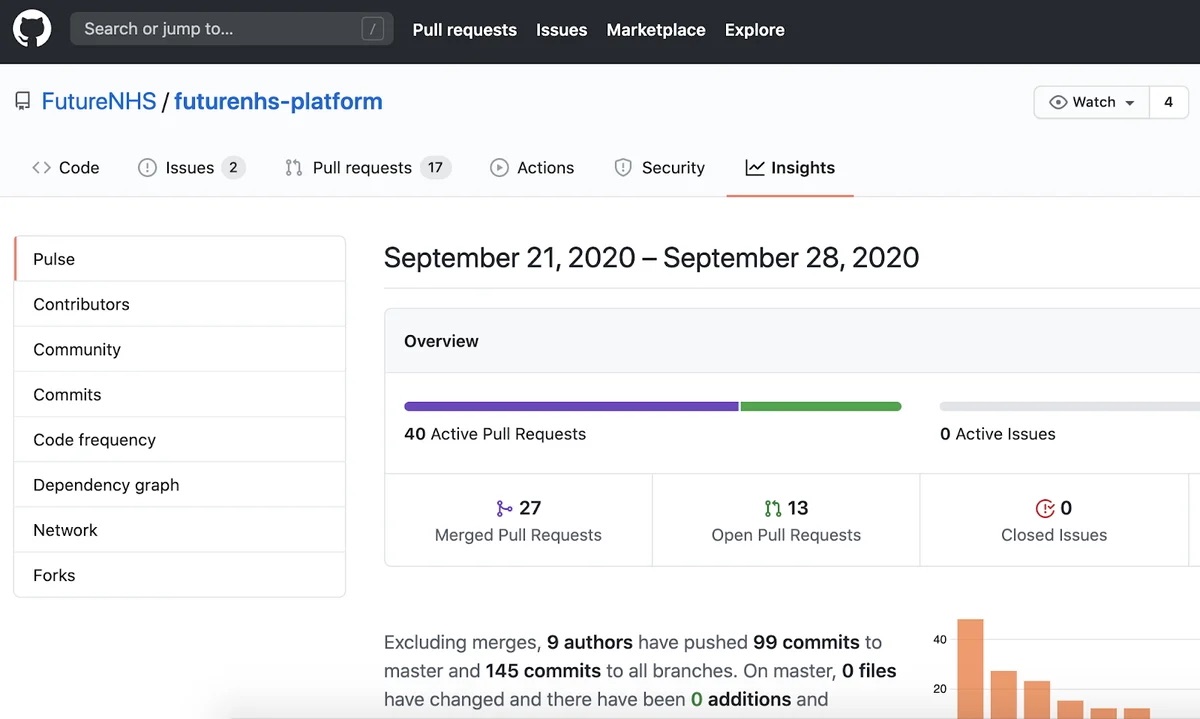
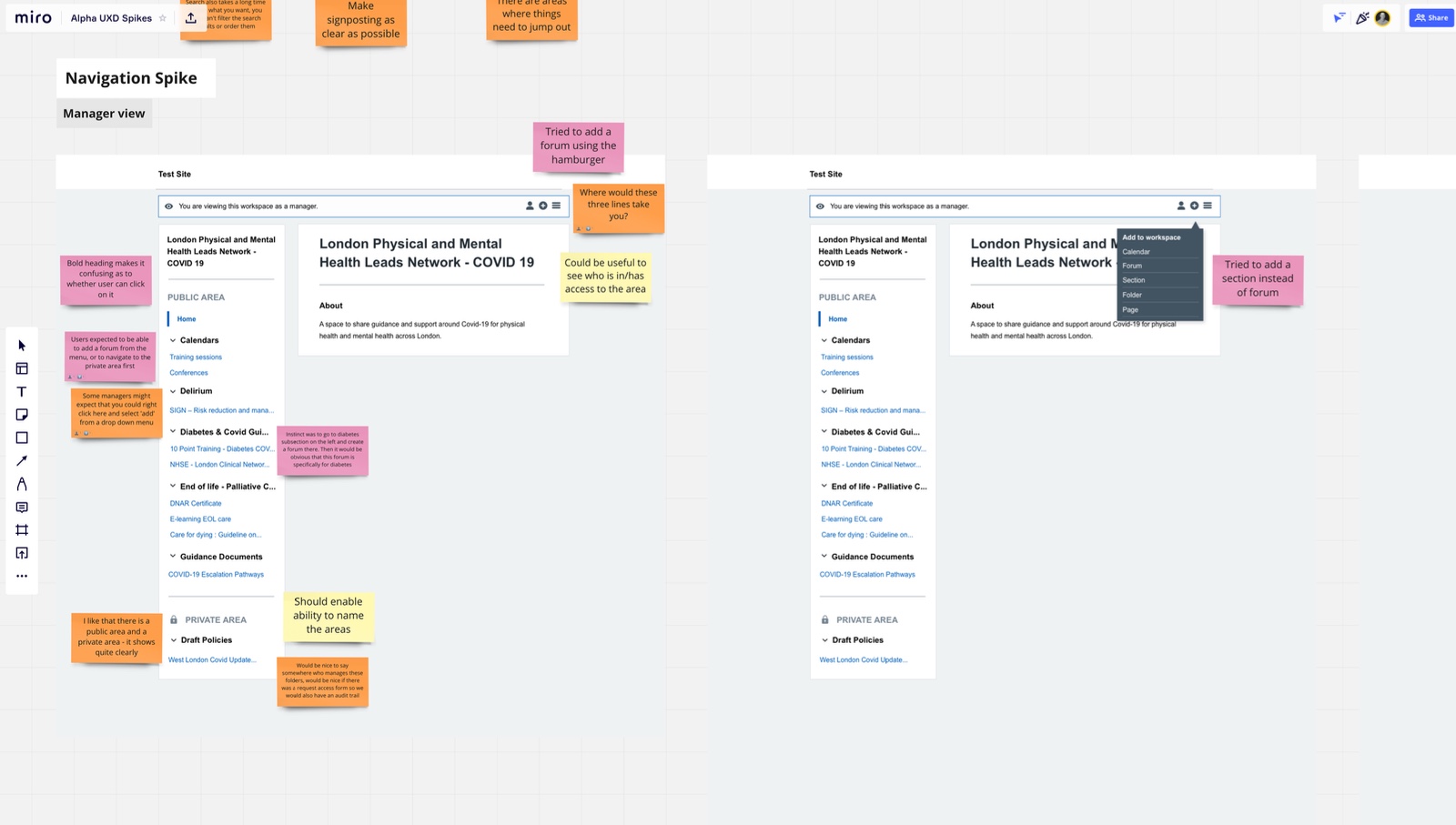
The work laid the foundation for a successor built in the open — more modern, more scalable, and cheaper to run — its roadmap grounded in evidence and a live FutureNHS community of beta testers shaping it round by round. Because it was built as an open-source public good, freely available on GitHub with its design system and research published alongside, the investment reaches well beyond a single platform. Migration could be phased to bring communities across without disrupting the work already thriving on them.
“We aim to become a truly digital organisation. We were looking for partners aligned with our vision — partners who challenge our thinking and improve our ways of working. The team showed a real cultural fit and alignment with ours.”
Building in the open taught me what trust as structure looks like at national scale. It is the question I keep working on as AI enters public services: systems people can inspect, challenge, and own.