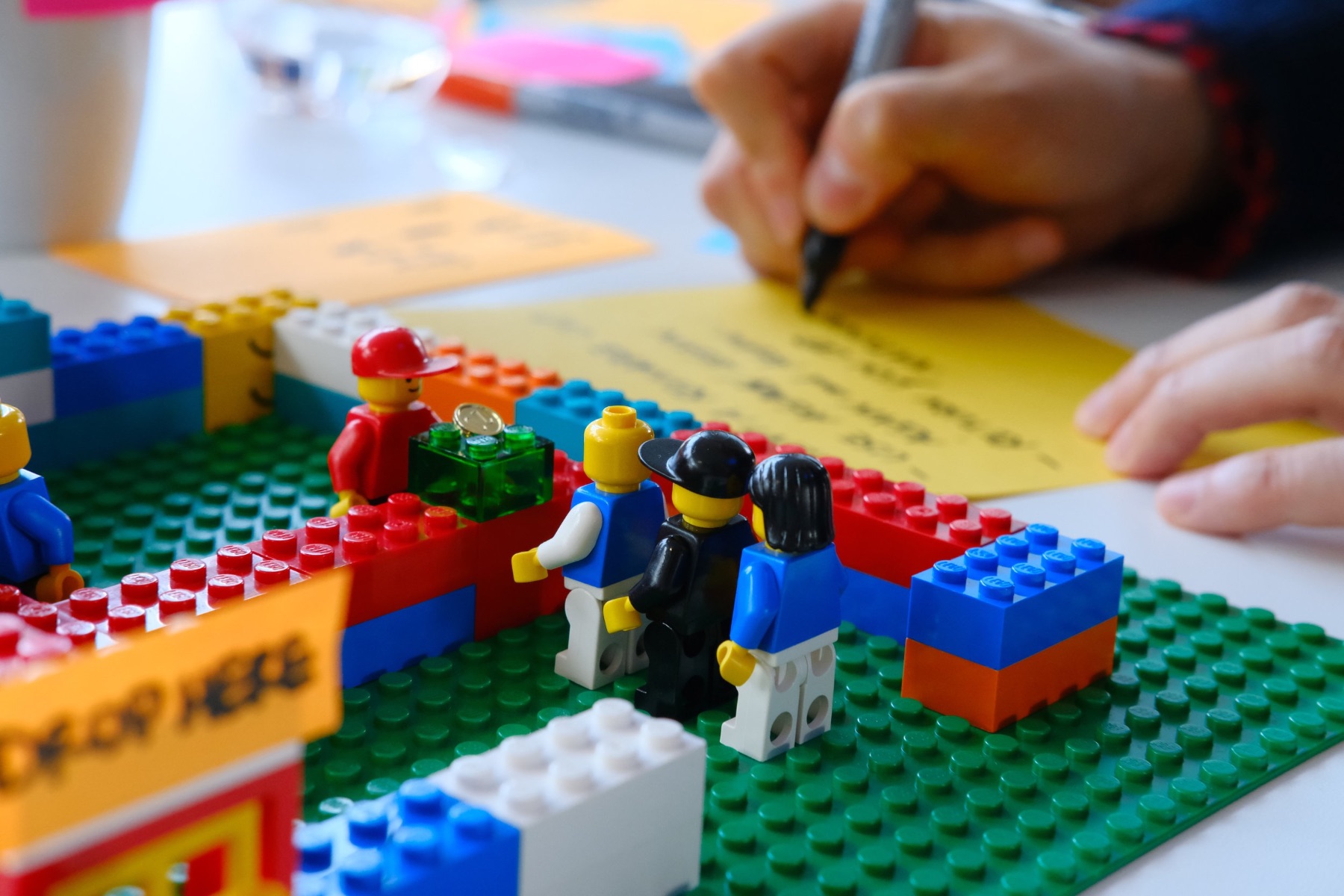
Travellers had moved to digital channels for the simple things — the quick purchase, the routine change. That left a genuine question for in-person service: if the easy tasks are gone, what is the person at the counter actually for? Nobody had redesigned around the answer. Core processes, tools, and systems were still built for pre-digital operations. Travellers and the mobility guides who served them were both working around a system that no longer matched the job.
I led the engagement end to end, with business and IT in the same room. We started in the stations: we travelled together to meet travellers, mobility guides, and station managers, and watched daily operations across the country. The fieldwork made one thing clear — some traveller groups genuinely need human support, and the existing process was getting in the way of giving it to them well.
From there I helped the organisation settle on a shared direction: consultative sales and service delivery — a clear account of what in-person support should become. My role was to connect the teams, hold that direction steady, and keep real users in the work, so the vision stayed something the stations could adopt rather than a slide that looked good in a steering committee.
The team mapped, reviewed, and re-imagined more than sixty business processes, and retired nine flows that were no longer needed. We designed new ways for mobility guides to give personalised service — including capturing traveller details upfront through travel cards, which cut errors and made each interaction faster.
Then we designed the full set of scenarios and interfaces for the new agent tool. Its visual language and interaction patterns deliberately match the public-facing digital channels, so a guide can walk a traveller through a self-service flow while helping them in person, without translating between two systems.
Station teams were part of the work the whole way through. Their insight shaped the design, and regular testing kept the tools honest against real daily tasks. Bringing them in early did something beyond better design: it built genuine ownership. Many became active contributors, and they will be the first beta users as the tool reaches the stations.
Ahead of the beta release, the team is tightening the link between design and engineering. Design decisions are being consolidated into a single code-based source of truth, which makes delivery faster and easier to scale. We also built a way to keep learning once the tool is live: for any major feature, the organisation can run desirability tests, technical spikes, prototypes, and service rehearsals directly in the station environment. The point is to lower the risk of each change and reach the insight sooner.
60+ processes re-imagined · 9 retired
The team redesigned whole workflows end to end, at national scale — the unit AI works on: the full workflow, not the single task. Mapping how the work actually happens, with business and IT in the same room, is exactly the discipline AI now depends on: a system can only act well inside an organisation that has made itself legible.